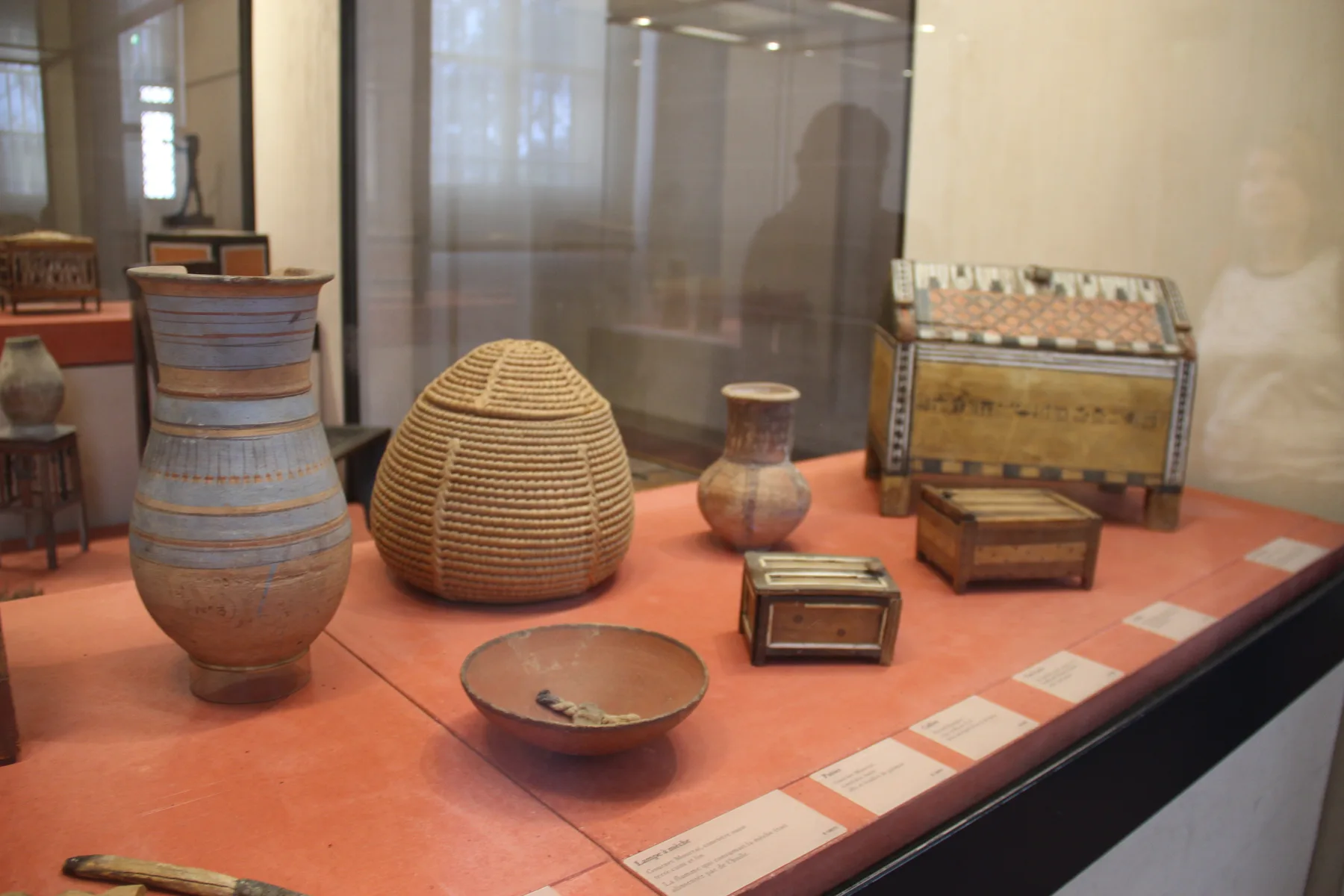
What museum storage does: location control, preventive care, research access, movement tracking and honest limits on what can be displayed. Each chapter separates direct record, editorial inference and the information still missing.
CHAPTER 01 / ED 03
Most collections are not on view
Gallery space, conservation needs and curatorial argument limit the number of displayed objects.
What supports it
Not displayed does not mean unimportant, forgotten or available without restriction.
Who is responsible
A named role, date and version make the information accountable.
What connects it
Field, accession and object identifiers preserve continuity between systems.
What stays open
A missing field or disputed reading remains visible rather than being completed by invention.
EDITORIAL QUESTIONWhat would another researcher need in order to verify this statement?
- Name the primary record.
- Copy the stable identifier.
- Separate observation and interpretation.
- State the remaining uncertainty.
CHAPTER 02 / ED 03
Location is a live record
Building, room, cabinet, shelf and container identifiers must change whenever an object moves.
What supports it
A perfect catalogue with an outdated location still fails collection care.
Who is responsible
A named role, date and version make the information accountable.
What connects it
Field, accession and object identifiers preserve continuity between systems.
What stays open
A missing field or disputed reading remains visible rather than being completed by invention.
EDITORIAL QUESTIONWhat would another researcher need in order to verify this statement?
- Name the primary record.
- Copy the stable identifier.
- Separate observation and interpretation.
- State the remaining uncertainty.
CHAPTER 03 / ED 03
Storage furniture matters
Shelves, trays, mounts and supports distribute weight and reduce abrasion, dust and accidental contact.
What supports it
The right enclosure depends on material, shape and condition.
Who is responsible
A named role, date and version make the information accountable.
What connects it
Field, accession and object identifiers preserve continuity between systems.
What stays open
A missing field or disputed reading remains visible rather than being completed by invention.
EDITORIAL QUESTIONWhat would another researcher need in order to verify this statement?
- Name the primary record.
- Copy the stable identifier.
- Separate observation and interpretation.
- State the remaining uncertainty.
CHAPTER 04 / ED 03
Integrated pest management
Monitoring, housekeeping and quarantine reduce risks without relying only on chemical treatment.
What supports it
A pest sighting is evidence to map, not a reason for indiscriminate intervention.
Who is responsible
A named role, date and version make the information accountable.
What connects it
Field, accession and object identifiers preserve continuity between systems.
What stays open
A missing field or disputed reading remains visible rather than being completed by invention.
EDITORIAL QUESTIONWhat would another researcher need in order to verify this statement?
- Name the primary record.
- Copy the stable identifier.
- Separate observation and interpretation.
- State the remaining uncertainty.
CHAPTER 05 / ED 03
Research access has a protocol
Handling plans, permissions and documentation protect objects while enabling study.
What supports it
Access may be limited by fragility, rights, cultural care or staff capacity.
Who is responsible
A named role, date and version make the information accountable.
What connects it
Field, accession and object identifiers preserve continuity between systems.
What stays open
A missing field or disputed reading remains visible rather than being completed by invention.
EDITORIAL QUESTIONWhat would another researcher need in order to verify this statement?
- Name the primary record.
- Copy the stable identifier.
- Separate observation and interpretation.
- State the remaining uncertainty.
CHAPTER 06 / ED 03
Display rotation is interpretation
Changing objects can reduce light exposure and open different collection stories.
What supports it
A rotation should be recorded so past displays remain researchable.
Who is responsible
A named role, date and version make the information accountable.
What connects it
Field, accession and object identifiers preserve continuity between systems.
What stays open
A missing field or disputed reading remains visible rather than being completed by invention.
EDITORIAL QUESTIONWhat would another researcher need in order to verify this statement?
- Name the primary record.
- Copy the stable identifier.
- Separate observation and interpretation.
- State the remaining uncertainty.
RECORD TEMPLATE
Six fields for an accountable note
Object identifier
__________________________________
Record author + date
__________________________________
Direct observation
__________________________________
Source or method
__________________________________
Interpretive statement
__________________________________
Uncertainty + next check
__________________________________
FILE AUDIT / 17 July 2026
Before publication
- Identifier resolves to the intended object.
- Image view and reuse status are stated.
- Provenance fields are not collapsed.
- Treatment and reconstruction remain visible.
- Translation and interpretation are attributed.
- Material corrections receive a new date.