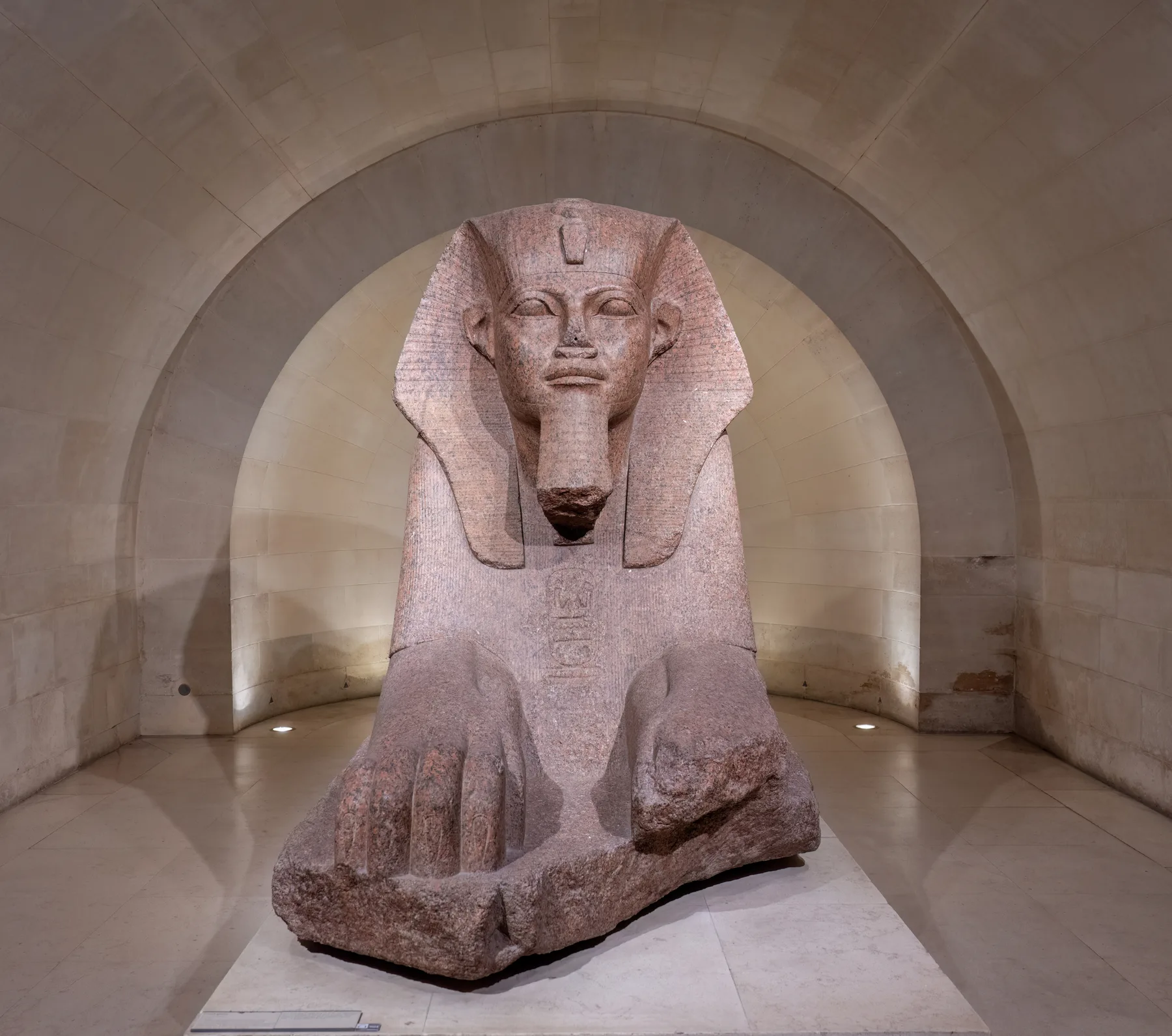
How threshold, scale, sightline, case, light and route make an exhibition claim before a visitor reads a single paragraph. Each chapter separates direct record, editorial inference and the information still missing.
CHAPTER 01 / ED 06
The first sightline sets hierarchy
A monumental object placed on axis becomes an anchor for the whole room.
What supports it
Visual dominance is a curatorial decision, not proof of historical importance.
Who is responsible
A named role, date and version make the information accountable.
What connects it
Field, accession and object identifiers preserve continuity between systems.
What stays open
A missing field or disputed reading remains visible rather than being completed by invention.
EDITORIAL QUESTIONWhat would another researcher need in order to verify this statement?
- Name the primary record.
- Copy the stable identifier.
- Separate observation and interpretation.
- State the remaining uncertainty.
CHAPTER 02 / ED 06
Sequence creates causality
Placing objects in chronological or thematic order can suggest development, continuity or rupture.
What supports it
Visitors may read sequence as certainty even where evidence is incomplete.
Who is responsible
A named role, date and version make the information accountable.
What connects it
Field, accession and object identifiers preserve continuity between systems.
What stays open
A missing field or disputed reading remains visible rather than being completed by invention.
EDITORIAL QUESTIONWhat would another researcher need in order to verify this statement?
- Name the primary record.
- Copy the stable identifier.
- Separate observation and interpretation.
- State the remaining uncertainty.
CHAPTER 03 / ED 06
Cases separate and connect
Glass protects material while controlling viewing distance, angle and groupings.
What supports it
A case can make several unrelated objects appear to form one original set.
Who is responsible
A named role, date and version make the information accountable.
What connects it
Field, accession and object identifiers preserve continuity between systems.
What stays open
A missing field or disputed reading remains visible rather than being completed by invention.
EDITORIAL QUESTIONWhat would another researcher need in order to verify this statement?
- Name the primary record.
- Copy the stable identifier.
- Separate observation and interpretation.
- State the remaining uncertainty.
CHAPTER 04 / ED 06
Light edits the surface
Directional light reveals relief and colour but also changes atmosphere and exposure.
What supports it
Conservation limits should be part of design, not an obstacle added at the end.
Who is responsible
A named role, date and version make the information accountable.
What connects it
Field, accession and object identifiers preserve continuity between systems.
What stays open
A missing field or disputed reading remains visible rather than being completed by invention.
EDITORIAL QUESTIONWhat would another researcher need in order to verify this statement?
- Name the primary record.
- Copy the stable identifier.
- Separate observation and interpretation.
- State the remaining uncertainty.
CHAPTER 05 / ED 06
Routes include bodies
Width, seating, height, sound and turning space determine who can stay with the story.
What supports it
A technically accessible entrance does not guarantee an accessible exhibition route.
Who is responsible
A named role, date and version make the information accountable.
What connects it
Field, accession and object identifiers preserve continuity between systems.
What stays open
A missing field or disputed reading remains visible rather than being completed by invention.
EDITORIAL QUESTIONWhat would another researcher need in order to verify this statement?
- Name the primary record.
- Copy the stable identifier.
- Separate observation and interpretation.
- State the remaining uncertainty.
CHAPTER 06 / ED 06
The exit is a conclusion
The final object and transition shape what question a visitor carries forward.
What supports it
A gift area or corridor should not accidentally become the exhibition’s only ending.
Who is responsible
A named role, date and version make the information accountable.
What connects it
Field, accession and object identifiers preserve continuity between systems.
What stays open
A missing field or disputed reading remains visible rather than being completed by invention.
EDITORIAL QUESTIONWhat would another researcher need in order to verify this statement?
- Name the primary record.
- Copy the stable identifier.
- Separate observation and interpretation.
- State the remaining uncertainty.
RECORD TEMPLATE
Six fields for an accountable note
Object identifier
__________________________________
Record author + date
__________________________________
Direct observation
__________________________________
Source or method
__________________________________
Interpretive statement
__________________________________
Uncertainty + next check
__________________________________
FILE AUDIT / 17 July 2026
Before publication
- Identifier resolves to the intended object.
- Image view and reuse status are stated.
- Provenance fields are not collapsed.
- Treatment and reconstruction remain visible.
- Translation and interpretation are attributed.
- Material corrections receive a new date.